


Search for St. László Coins in Hungary
Location: Pusztavám, Fejér County, Hungary.
The natural landscape of Pusztavám is rich in biodiversity, with forests, meadows, and streams supporting a vibrant mix of wildlife. We can often spot Hungarian green lizards basking in the sun, deer grazing at forest edges, and frogs near wetlands. In spring and summer, the area bursts with life, purple wildflowers cover the meadows, and a wide variety of mushrooms emerge beneath the trees. This diverse ecosystem offers a perfect retreat for nature lovers, photographers, and wildlife observers. However Pusztavám It’s not only known for its beautiful nature, but it’s rich Eocene-era fossil deposits, which globally spanned from approximately 56 million to 34 million years ago. It is part of the Paleogene Period and followed the Paleocene epoch. In Hungary, this period was marked by significant marine transgressions (rising sea levels) from the Tethys Ocean, leading to the widespread formation of shallow marine environments, especially in the Transdanubian Range, including areas like Pusztavám, Dudar, and Bakony Mountains.
The Eocene period in Hungary characterised with shallow tropical seas as most of western Hungary was submerged under warm, shallow seas, ideal for the formation of limestones, marls, and nummulitic beds. With it’s rich fossil deposits these conditions supported a high diversity of marine life, leading to excellent fossil preservation, especially for foraminifera (e.g. Nummulites), mollusks, echinoderms, and potentially cartilaginous fishes like sharks. Research Significance is quite important in this region as Eocene coal seams, especially around Pusztavám, were mined historically, and during excavation, numerous marine fossils were discovered.


The Legend Of St. László Coins

When King László and his knights chased the Kun tribes, they threw gold coins behind them, hoping the Hungarians would stop to pick them up and give the Kuns a chance to escape. László prayed to the heavens for help, and his prayer was answered: the coins instantly turned to stone. The pursuit continued, and ultimately, the Hungarians achieved victory.
Ostrea (Oyster) shells such as those from the genus Ostrea, have been found in the area which indicate the presence of shallow marine conditions during the Eocene.
Nummulites millecaput, a large, disc-shaped foraminifera thrived during the Middle Eocene. Specimens from Pusztavám have been uncovered during open-pit coal mining operations. These fossils are significant for biostratigraphic studies and help reconstruct ancient marine environments.
Gastropod Fossils: Calcite-preserved gastropod fossils have also been discovered in Pusztavám.
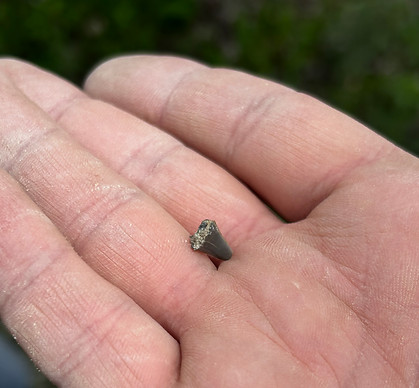
These snails provide further evidence of the diverse marine life that once inhabited the region.While specific records of shark teeth discoveries in Pusztavám are limited, however the possibility is never zero to find some fragments.
Eocene marine deposits in Hungary have yielded shark teeth fossils in other locations. For instance, the Ipolytarnóc Fossils Nature Conservation Area, another significant Eocene site in Hungary, has revealed teeth from 24 species of sharks. Given the similar geological age and marine conditions.
For Specimen Documentation from the area please visit my Portfolio.