

_JPG.jpg)

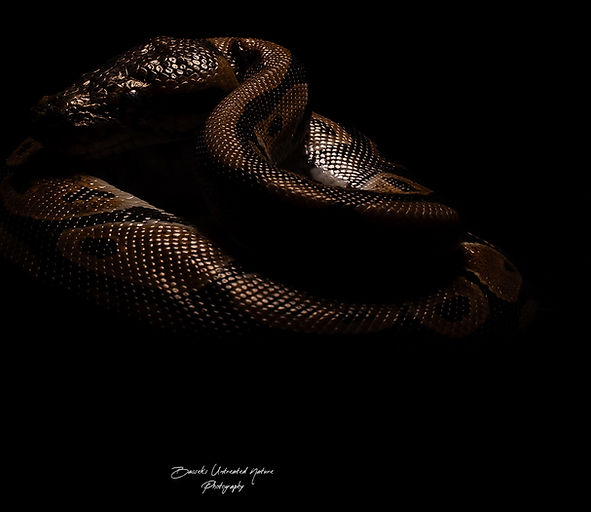
The Ball Python | Python Regius is a modern species of non-venomous constrictor snake native to sub-Saharan Africa. They have evolved within the last few million years as part of the modern linage.
However, unlike dinosaurs or trilobites, Python regius itself does not have a fossil record stretching deep into geologic time.
Although Python regius lacks fossils, the Genus (Pythonidae) does have a fossil record which is coming from the Paleocene-Eocene (about 56–50 million years ago).
Their Fossils found in Europe, Africa, and Asia, suggesting a wider prehistoric range such as Fossils of Python Europaeus from the Eocene of France, and Python sebae-like ancestors in Africa.
Pythons are believed to have originated in the Southern Hampshire, with early dispersal to Africa and Asia. Their genetic evidence places Python Regis as. Derived species in the Genus Python, related to Python Sebae (. African Rock Python )
Evolutionary heritage
Snakes evolved from lizard-like ancestors around 100–150 million years ago.
Fossils of ancient snakes like Najash (about 90 million years old) show that early snakes still had fully formed back legs, including femurs and toes which over time, as snakes adapted to a burrowing or aquatic lifestyle so, they lost the need for limbs, and their bodies became more streamlined.
.jpg)
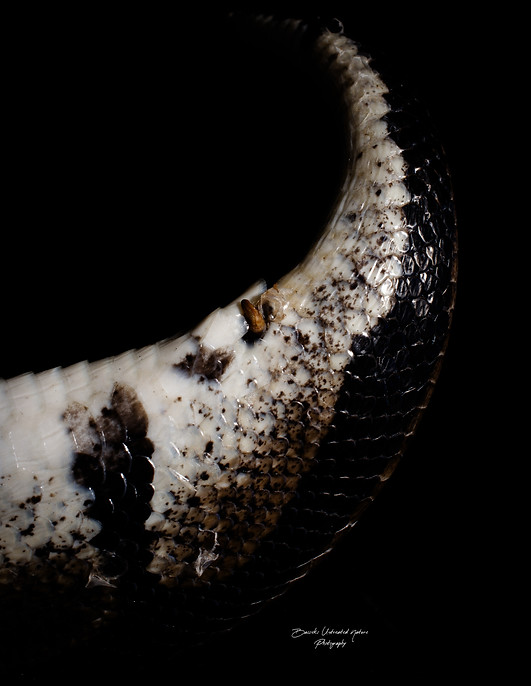
Today’s vestigial structures are evidence of this evolutionary transition.
The Vestigial Limbs ( Spurs in Pythons and Boas) Even they are not a “ living fossils “ however, they still possess a remnants that gives them a right to fit into an ancient linage. These hind limbs or back legs that have lost original functions over evolutionary time, but still remain.
They are appears as a tiny bones inside the body or as an external claw-like projection near the tail.
These tiny bones are can be found in more primitive, ancient snake species, such as Pythonidea ( python Regius, Python Sebae) and the family Boidae, Boa Constrictor, Eunectes (Anacondas)
They play a key role in mating, used to stimulate and grip the female.
Spurs are often mobile and can move to resemble tiny legs. In some species, like the Madagascan boa, they are also used in male combat. Similar spurs are seen in male veiled chameleons and certain tortoises, though their functions vary or remain unclear.
OR IS IT ?