
Chalcedony - San Luis Potosi
Private Collection

Beyond it's visual appeal, chalcedony from this region is highly significant to geologists and mineralogists. It’s formation offers valuable insights into ancient hydrothermal systems and volcanic processes. It is often found alongside hyalite opal, another local mineral known for its dramatic green fluorescence under UV light, that making these specimens even more special.
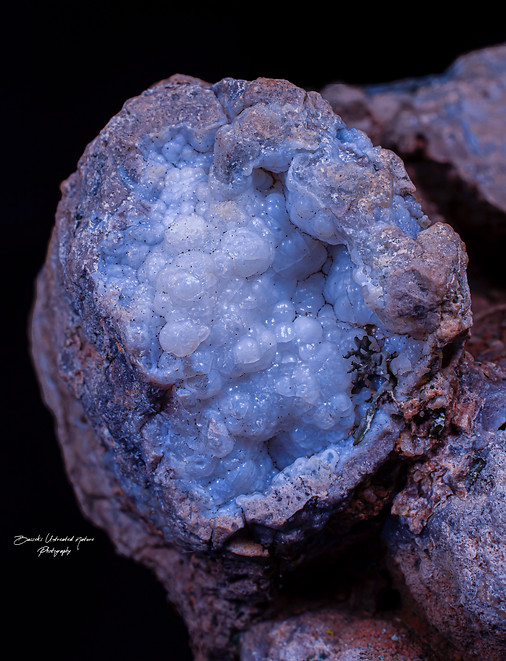
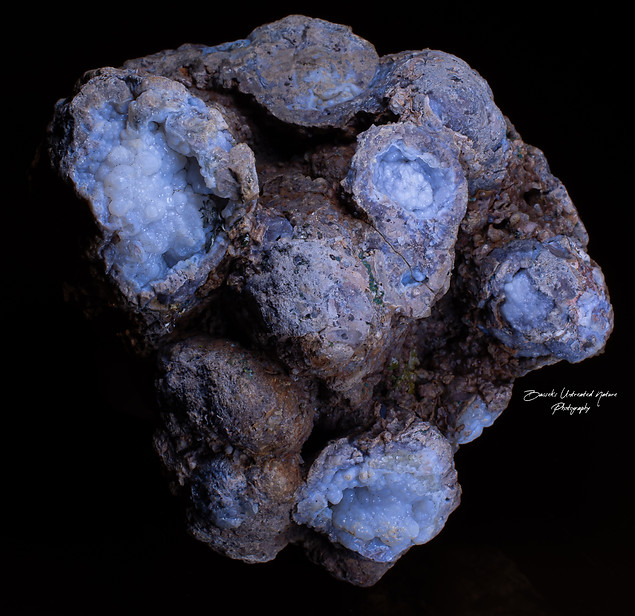
This Chalcedony
Found in San Luis Potosí, Mexico, is a stunning mineral that tells the story of the region’s ancient volcanic past. During the Tertiary period, intense volcanic activity in the area led to the deposition of silica-rich rhyolitic lava flows. Over time, hydrothermal fluids moved through the fractured volcanic rock, gradually depositing silica within cavities and cracks. This process gave rise to a variety of opals and chalcedony formations that are now admired for their beauty and scientific value.
These, chalcedony forms predominantly through hydrothermal activity. As silica-rich fluids flow through underground cracks and voids, they cool and interact with the surrounding rock. Silica slowly precipitates and accumulates, forming the microcrystalline structure that defines chalcedony.
One remarkable locality is the General Zaragoza Mine, about 50 km northwest of the city, where volcanic breccias and welded tuffs have undergone intense hydrothermal alteration, producing extensive kaolin deposits and creating a silicified zone rich in opal and chalcedony. These formations are the result of silica being mobilised and redeposited, replacing the original host rock with beautiful, mineral-rich structures.
Their characteristic includes the eye catching Botryoidal Structures - Rounded, grape like clusters which is typical of the hydrothermal environments.
If we have a closer look the other thing we can notice it’s the porcelaneous texture, the smooth , waxy finishes that are characteristic of microcrystalline quartz. Their color variations ranging from white, grey, different shades of blue, brown (called bacon) and green. This colors are the results of the traces of elements and impurities which makes every specimen a true art of nature.
Today, the opal and chalcedony deposits of San Luis Potosí continue to captivate collectors, researchers, and mineral enthusiasts alike. Whether studied in a lab or showcased in a collection, these minerals reflect the dynamic natural forces that shaped them and highlight the geological richness of Mexico’s volcanic terrain.