


_JPG.jpg)
Diptera
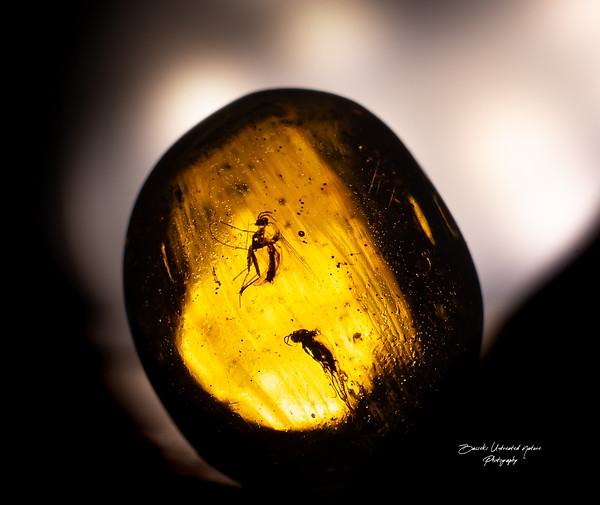
Commonly known as true flies, have a rich fossil record in amber, providing invaluable insights into their evolutionary history, ecological roles, and interactions with other organisms. Amber, fossilised tree resin, often preserves these insects in exquisite detail, capturing moments from millions of years ago.
The oldest known amber-preserved dipteran is a nematoceran fly from the Late Triassic of northeastern Italy from 230 million years ago however, This discovery pushes back the known fossil record of Diptera in amber by approximately 100 million years . Between 145-66 million years ago there was a diversification of Diptera, with numerous species preserved in amber from various regions such as Lebanon, Burma and France.Eocene Epoch (56–34 million years ago): Baltic amber from this period has yielded a high diversity of dipteran larvae, providing insights into the ecology of ancient forest ecosystems. Advanced imaging techniques have revealed detailed morphological features, aiding in the understanding of their ecological roles .
- Pathogen Hosts: Fossil evidence indicates that dipterans were hosts to various pathogens. For instance, a biting midge from Early Cretaceous Burmese amber was found infected with a cytoplasmic polyhedrosis virus and trypanosomatid parasites, providing the earliest fossil records of such infections in insects.
- Pollination: Some extinct flies, such as those from the Zhangsolvidae family, played roles as pollinators. A notable specimen from 100 million years old Spanish amber shows a fly with a long proboscis adapted for nectar feeding, bearing gymnosperm pollen on its body, indicating a pollination relationship during the Cretaceous .
Amber fossils of Diptera
offer unparalleled insights into the morphology, behaviour, and ecology of ancient flies. They help reconstruct past ecosystems, understand evolutionary trajectories, and reveal interactions between insects and other organisms, such as plants and pathogens. These fossils serve as time capsules, preserving moments from Earth’s deep past in remarkable detail.
