


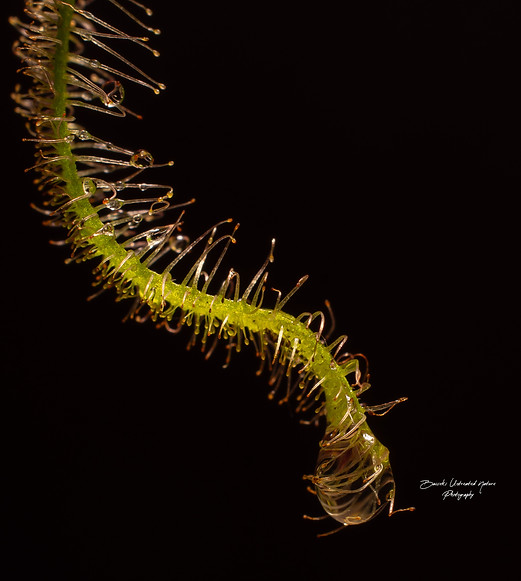
The Genus Drosera,
commonly known as sundews, have an ancient lineage, with fossil and molecular evidence suggesting their origin dates back at least 40 million years to the Eocene Epoch. This long evolutionary history has allowed Drosera species to diversify extensively, adapting to a wide range of climates and ecological niches. This Genus is include over 200 species of carnivorous plants found on every continent except Antarctica. These plants are particularly abundant in nutrient poor environments such as bogs, fens, and acidic wetlands, where they have evolved a unique mechanism to supplement their nutrient intake via insect predation.
One of the most distinctive features of sundews is their glandular trichomes, or “tentacles,” located on the surface of their leaves. These trichomes secrete a viscous mucilage, giving the plant a glistening, dew-like appearance, hence the name “sundew.”
That glistening “dew” is not water, but a sticky secretion used to ensnare unsuspecting insects and Some Drosera species can complete the digestion of a small insect in just a few days and reset their traps within 24 hours!
Mechanism of Carnivory
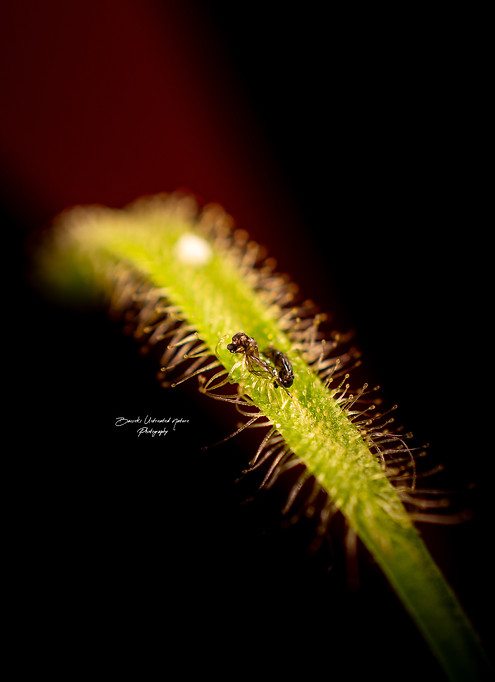
They are attract or “lured” Insects by the glistening droplets and, in some species, by mild scent cues. After the prey becomes immobilised upon contact with the mucilage the leaf tentacles then slowly bend toward the prey in a thigmonastic response, increasing surface contact.
They are use a digestive enzymes (e.g., proteases, phosphatases) that are secreted, and breaking down the soft tissues of the prey. The final stage is when the plant absorbs nutrients, particularly nitrogen and phosphorus, which are often deficient in its native soils.
Their importance in the ecosystem
Sundews occupy a crucial job in their ecosystems.
By thriving in low-nutrient environments, they help maintain the balance of insect populations and contribute to the diversity of bog and wetland flora however, while Drosera Capensis (Cape sundew) is one of the most popular species in cultivation due to its ease of care and prolific seed production, it is also considered invasive in several non-native regions such as New Zealand, Hawaii, and Australia.
Their rapid reproduction via seed, adaptability to various climates, lack of natural predator, and they are an intimidating competition for native flora in sensitive ecosystems.
Important
If you want to Grow them make sure you keep them enclosed, in contained environments such as in terrariums, greenhouse or indoor setups with high humidity and bright, indirect light. Avoid outdoor planting in non-native areas and never dispose of plant material or seeds in natural habitats .