


The European hornet
Vespa Crabro, is one of nature’s most misunderstood insects. Native to Europe and parts of Asia and now also found in North America, this large, social wasp often sparks fear due to its size and painful sting.
But behind the reputation lies a complex story of cooperation, survival, and ecological importance.
European hornets live in highly organized colonies led by a single queen. She is the only reproductive female, while sterile female workers handle all other tasks like, nest building, food collection, and defense.
The males appear only late in the season for mating.
Hornets communicate using both chemical and sound signals. They release pheromones and use vibrations (stridulation) to coordinate defense and foraging. Colonies are typically built in tree cavities, walls, attics, or abandoned burrows, demonstrating their adaptability to wild and human environments alike.
European Hornet - Vespa Cabro
Private Collection
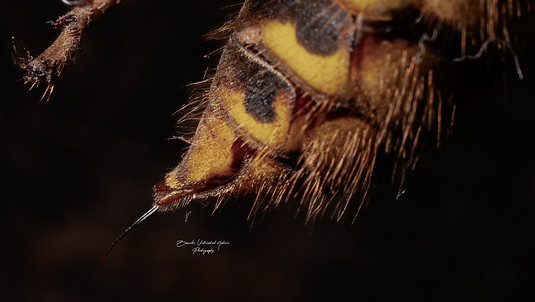
What happens when you get Sting?
They can sting multiple times, repeatedly not like bees, that can use their sting only once. Their sting can be painful, and for those allergic to venom, potentially life-threatening. The allergic response is caused by proteins like Phospholipase A1, Antigen 5, Hyaluronidase, and Mastoparan and all of which can trigger severe immune overreactions in sensitive individuals.

They are Predators, Not Pest!
Beneath their armored bodies and fierce jaws lies a role few appreciate. Every caterpillar they catch, every fly snatched midair, every beetle or spider subdued and each one is part of an unspoken contract with the ecosystem. Hornets keep populations in check. They do what pesticides attempt to replace but often fail to match so they restore the balance.
But their work doesn’t stop there!
When fruit falls and begins to rot, when small creatures die and decay, hornets arrive not just as hunters, but also as scavengers. They clean. They recycle. They return nutrients to the soil. A dead apple becomes life again through the work of a creature so many fear and so few understand.
So next time you hear the buzz of wings in the summer breeze, remember, the hornet isn’t a villain in nature’s story, it’s one of the quiet curator of the forest floor.